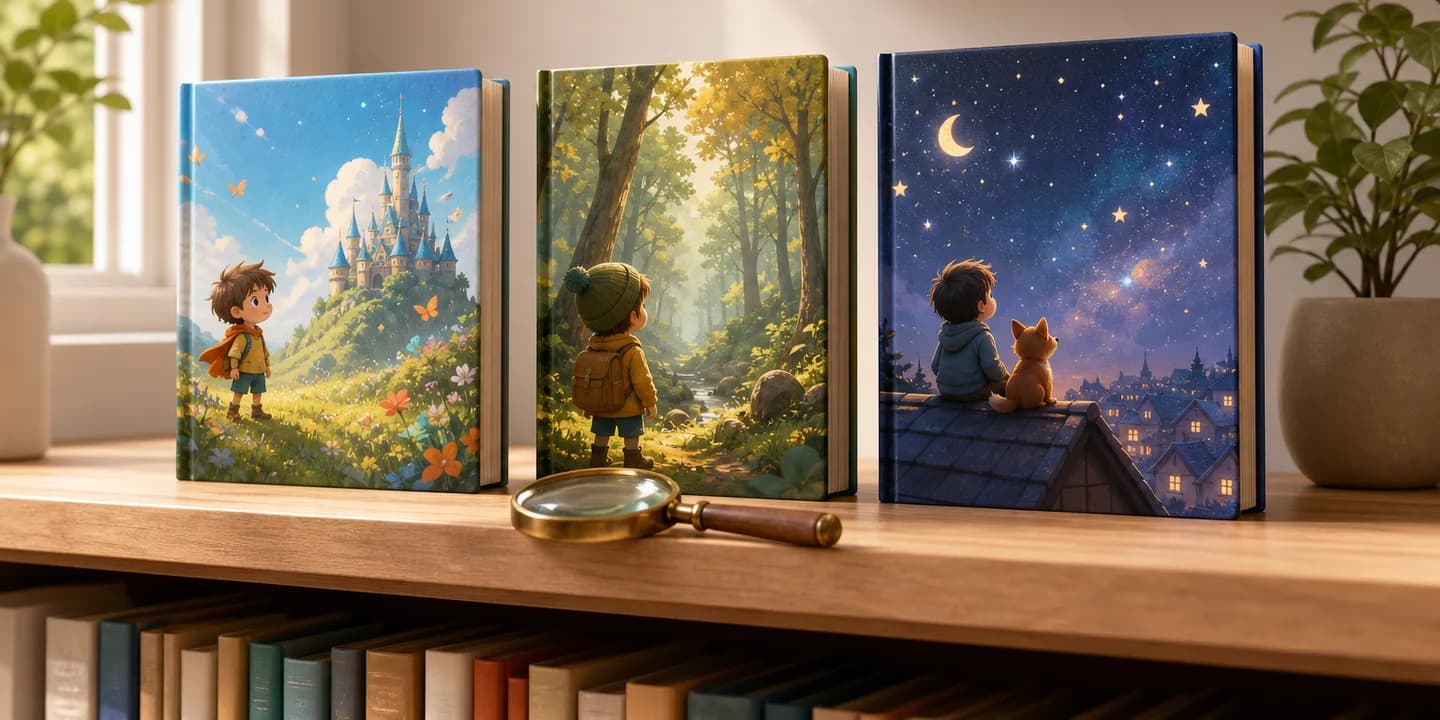
"Personalized children's book" now describes two very different products, and the difference is worth understanding before you buy.
How template books work#
Traditional personalized books — the kind that dominated the last decade — start from a fixed, human-illustrated story. Personalisation means swapping in your child's name, sometimes a hair colour and skin tone from a preset menu, occasionally a dedication page. The pictures are the same for every child with that preset; the plot never changes.
To be fair to the format: the illustration quality is dependable, because a professional drew it once. If you want a specific licensed character or a classic title with your child's name in it, a template book does that well.
How AI-illustrated books work#
An AI-illustrated book is generated for your child from scratch. On KindFable the process looks like this:
- Your photo becomes a cartoon master avatar of your child. We never save the photo — only the drawing is kept.
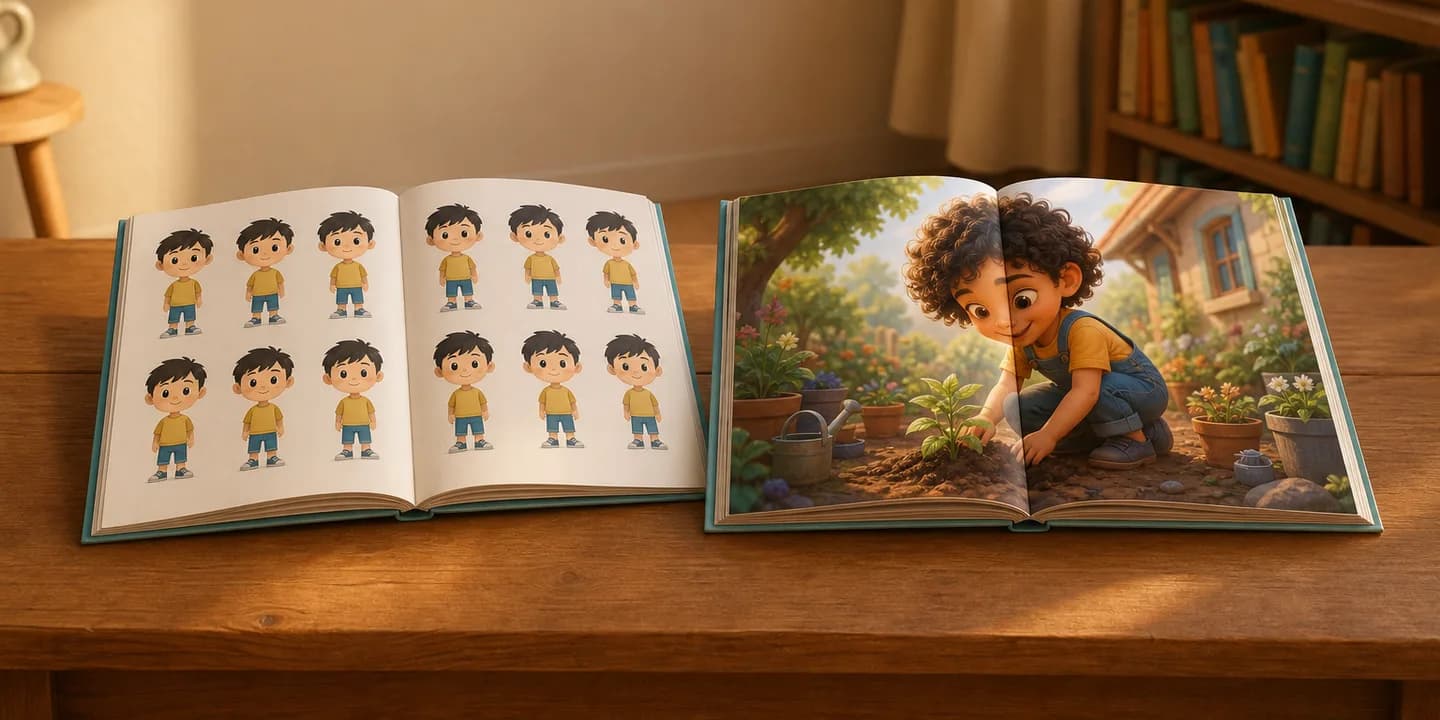
- The avatar becomes a multi-pose character sheet, and every page is illustrated from those references. This is the part that separates serious tools from novelties: without a reference chain, AI heroes drift from page to page. With it, the child on page twelve is recognisably the child on the cover.
- The story itself is written for your child — name, age, interests, up to three real companions (a grandparent, the dog, a favourite toy), and even a real memory from your week if you give it one. No two families get the same book.
The honest comparison#
- Likeness — template: a preset that roughly matches. AI: illustrated from your actual child's photo, consistent across every page.
- Story — template: fixed plot, name inserted. AI: written around your child's real life and interests.
- Cast — template: usually the child alone. AI: the baby sister, Grandpa and the dog can all be in it, drawn consistently.
- Predictability — template wins here: you know exactly what you will get. AI output varies — which is why you should never pay before seeing the finished book.
- Turnaround — template print runs are fixed; AI books exist digitally the same day.
What a careful AI book product does about the risks#
AI illustration can go wrong — anyone who has played with an image generator knows it. Two safeguards matter, and we built KindFable around both:
- You see your child's painted cover free before paying. The likeness is the thing that can go wrong, and the cover is where you judge it; if it is not right, you have lost nothing.
- A human-confirmable print gate. The printed book is only sent to the press after you have reviewed and confirmed the final book — no surprise pages in the mail.
So which should you buy?#
If you want a known classic with a name swap, buy a template book. If you want a book where your child — the real one, with the freckles and the dinosaur obsession and the new baby brother — is visibly the hero of a story about their own life, that is what the AI approach was built for.
The easiest way to judge is to look at finished output: read complete sample books made from a family photo and a real moment, then try one free — softcovers start at $39 on the pricing page. And for the research underneath this whole comparison — what a child's own name and likeness actually do in their brain — see the benefits of personalized books, per the science. If you want the wider field rather than the two approaches, every AI childrens book generator compared covers prices, page counts and what each one does with the photo.
The best-known template book of all is the name-letters one; Lost My Name, and what came after puts it beside a photo-painted book, honestly.