Children's Christmas books have a strange working life. They come out of a box at the start of December, get read most nights for four weeks, and go back in the box for eleven months. That pattern — heavy use, then a year on a shelf — is what should decide which ones you buy, and it is the thing every Christmas list leaves out.
The ten below are chosen for it: books that survive twenty readings inside one month, and are still the right book when the box is opened again next year.
Which Christmas book does this house need?#
| What December looks like in your house | Read | Lands from |
|---|---|---|
| A toddler who mostly wants to press things | Little Blue Truck's Christmas | 2 |
| The waiting is the problem — meltdowns before the day | Llama Llama Holiday Drama | 2 |
| You want the one you will end up knowing by heart | Mr. Willowby's Christmas Tree | 3 |
| Someone in the house needs the presents put in their place | How the Grinch Stole Christmas! | 3 |
| A long, quiet, believe-it-or-don't story | The Polar Express | 5 |
| The Nativity, told gently, for the youngest | Room for a Little One | 3 |
| The Nativity, told as poetry | Song of the Stars | 4 |
| December, but no Christmas in it at all | The Snowy Day | 3 |
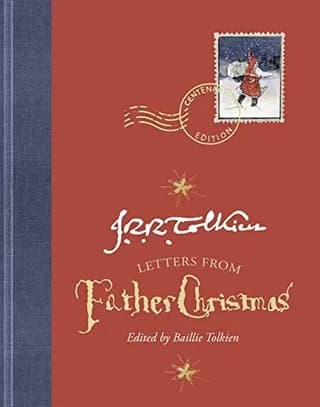
| Past picture books, still wants the ritual | Letters from Father Christmas | 7 |
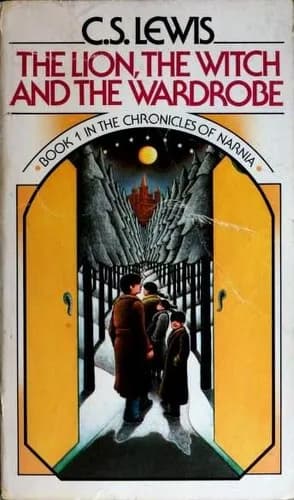
| Long evenings and a chapter a night | The Lion, the Witch and the Wardrobe | 8 |
"Lands from" is our call on the age a child gets something out of it, which is not always the age it is sold at. That gap is the single most useful thing on this page, and the next section is why.
Why is a Christmas book a different purchase?#
A Christmas book is a book you buy once and read in bursts. An ordinary picture book gets read a few times a month across several years, so it grows with the child in small steps. A Christmas book gets a concentrated month, disappears, and comes back to a child who is a whole developmental stage older. Nothing else on the shelf works that way.
Two things follow, and they are the whole argument of this page.
First, repetition is the feature, not the fault. A Christmas book that cannot take twenty readings has failed at its only job. The books that take it are the rhythmic ones, the cumulative ones, and the ones with enough happening in the pictures to find something new on the fifteenth look. One-joke books and twist endings die around reading four.
This is also the better shape for the child. In a study published in Frontiers in Psychology, Horst, Parsons and Bryan read storybooks to three-year-olds over a week — one group heard the same stories again and again, the other heard nine different ones. Every child heard each new word exactly twelve times. A week later, the children who had heard the same stories performed 150% better at remembering the new words. Same exposure, different result, and the only variable was repetition of the same book.
Second, the child who meets the book again is not the child who put it away. Eleven months is an enormous distance at three, or at five. This is why so many Christmas books get one good year and then sit in the box: they were bought to fit exactly, and exact fits expire.
Buy for next December, not this one#
The practical rule: buy at the top of the child's range, not the middle. A book that is slightly ahead is read to them in its first December; in its second it is read with them, and by its third they tell you what happens before you turn the page. A book that fits perfectly on the day you buy it gets one December.
And here is where we disagree with almost every list on the subject. The lists sort by theme, or by whichever titles are newest — the autocomplete for this search is full of people appending a year to it. Christmas is the one category where newness is least useful, because the box is supposed to accumulate. A book earns its place by being the one that gets pulled out again, and nobody can know that about a title published in August.
Books for the youngest Decembers#
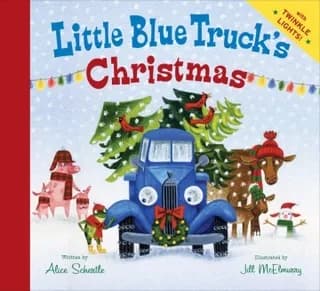
1. Little Blue Truck's Christmas — Alice Schertle, illustrated by Jill McElmurry (2014).
- Written by
- Alice Schertle
- Illustrated by
- Jill McElmurry
- First published
- 2014
- Ages
- 2–5
- Format
- Board book with lights
The one that works when nothing else does. It is a counting book hidden in a rhyme, the trucks and animals repeat, and the last page has actual lights in it — which sounds like a gimmick until you watch a two-year-old turn back to it eleven times. Sturdy enough to be carried around, which at this age is the same thing as being loved.
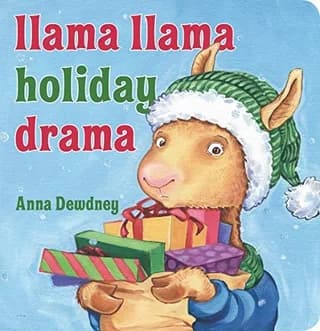
2. Llama Llama Holiday Drama — Anna Dewdney (2010).
- Written by
- Anna Dewdney
- First published
- 2010
- Ages
- 2–5
- Format
- Board book and picture book
The only book on this list about the actual emotional weather of December: a small child who wants Christmas now, gets overstimulated, and falls apart in a shop. It ends with the mother saying the point out loud — that the waiting is part of it. Read this one in the second week, when it starts to be true.
The ones that last#
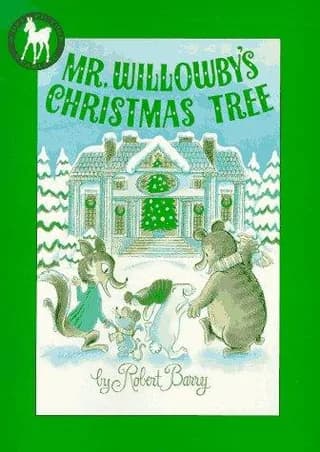
3. Mr. Willowby's Christmas Tree — Robert Barry (1963).
- Written by
- Robert Barry
- First published
- 1963
- Ages
- 3–7
- Format
- Picture book
A cumulative tale, and the best-built book here. A tree is too tall, the top is cut off, and the offcut passes down through the house — to the maid, the bear, the fox, the mouse — each one exactly right for its owner. The structure means a child can predict the next page from about the third reading, which is precisely why it survives the twentieth. Sixty years old and it does not feel it.
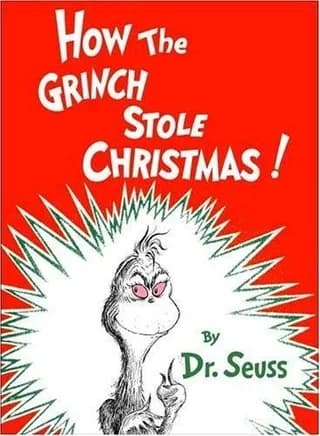
4. How the Grinch Stole Christmas! — Dr. Seuss (1957).
- Written by
- Dr. Seuss
- First published
- 1957
- Ages
- 3–7
- Format
- Picture book
Read it aloud and it turns out to be a rhythm book — the metre carries a child who is too young for the plot, and the plot is waiting for them a year or two later. It is also the only Christmas book most children meet that is openly rude about presents, which is a useful voice to have in the house on the 26th.
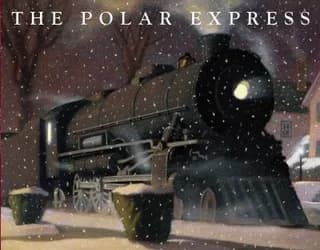
5. The Polar Express — Chris Van Allsburg (1985).
- Written by
- Chris Van Allsburg
- First published
- 1985
- Ages
- 5–8
- Format
- Picture book
The honest note this book needs: it is the most over-recommended title in the category. It won the Caldecott Medal — the American Library Association's own list of Medal and Honor books from 1938 to the present records it as the 1986 winner — and the paintings deserve it. But it is long, quiet and melancholy, the tension is internal, and the whole thing turns on a bell that only believers can hear. A three-year-old will not sit through it. Given at five it is extraordinary; given at two it sits in the box for three years, and this is the most common mis-buy on every list.
If your Christmas is the Nativity#
Worth choosing deliberately. General lists mix a nativity book in among the elves and it usually means neither audience is served — which is why "about Jesus" and "Christian" are the two commonest things people add to this search.
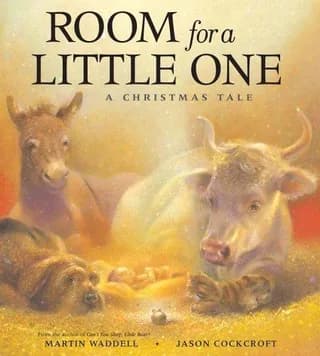
6. Room for a Little One — Martin Waddell, illustrated by Jason Cockcroft (2004).
- Written by
- Martin Waddell
- Illustrated by
- Jason Cockcroft
- First published
- 2004
- Ages
- 3–7
- Format
- Picture book
The stable story told sideways, through an ox who makes room for each animal that arrives — the donkey, the dog, the cat — and then for one more. The repeated invitation gives a young child a line to join in on, and the whole theology of it lands without a word of explanation. Waddell never raises his voice; Cockcroft's golden light does the rest.
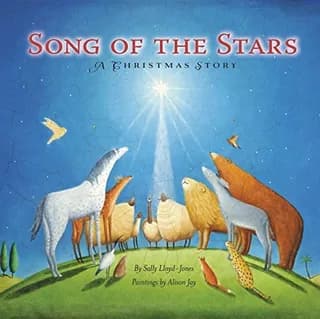
7. Song of the Stars — Sally Lloyd-Jones, illustrated by Alison Jay (2011).
- Written by
- Sally Lloyd-Jones
- Illustrated by
- Alison Jay
- First published
- 2011
- Ages
- 4–7
- Format
- Picture book
The same story told as a build: the whole of creation passing the news along, animal to animal, until it arrives. Jay's crackle-glazed paintings are the draw, and there is no manger scene until the end, which keeps a four-year-old looking. Read it slowly — it is written to be said, not skimmed.
December without Christmas#
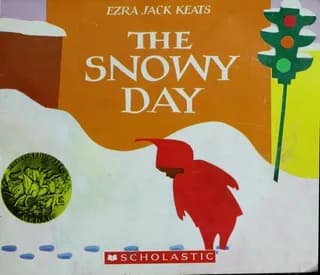
8. The Snowy Day — Ezra Jack Keats (1962).
- Written by
- Ezra Jack Keats
- First published
- 1962
- Ages
- 3–7
- Format
- Board book and picture book
For households that do not do Christmas, and for the evening in a house that does when everyone has had enough of it. A small boy wakes to snow and spends a day in it — a stick, a snowball in a pocket that does not survive the night, and nothing else. The 1963 Caldecott Medal winner in the same ALA list above, and one of the first American picture books to put a Black child at the centre of an ordinary day rather than a story about being one. It is the quietest book here and the one children ask for most.
Past picture books#
9. Letters from Father Christmas — J.R.R. Tolkien (1976).
- Written by
- J.R.R. Tolkien
- First published
- 1976
- Ages
- 7 and up
- Format
- Illustrated letters
For over twenty years Tolkien wrote and painted a letter to his children each December, as Father Christmas, complete with a clumsy Polar Bear who kept ruining things. Read one a night through December and it becomes the ritual rather than a book — which is what a child of eight who has outgrown picture books still quietly wants.
10. The Lion, the Witch and the Wardrobe — C.S. Lewis (1950).
- Written by
- C. S. Lewis
- Illustrated by
- Pauline Baynes
- First published
- 1950
- Ages
- 8–12
- Format
- Chapter book
Not marketed as a Christmas book and better for it. It is set in a world under a spell where it is "always winter and never Christmas", and the moment the spell breaks is Father Christmas arriving. A chapter a night takes most of December, and it gives an older child something to do with the waiting.
Should you wrap twenty-four books for Advent?#
This is the one piece of Christmas book advice we would argue with, and it is on nearly every list. The practice: buy twenty-four books, wrap them, and let the child open one a night through December. Booksellers suggest it warmly, which is not surprising, and it is why "in bulk" turns up in the autocomplete for this search.
As a ritual it is lovely. As reading it is the worst possible shape. Twenty-four books opened once each is precisely the losing condition in the study above — many different stories, each heard once — and that was the group which had not held on to the new words a week later. The unwrapping is doing the work, and the books are the wrapping paper.
If you want the ritual, keep it and fix the arithmetic. Wrap eight books three times each, so a returning book is a small reunion rather than a repeat. Or wrap twenty-four and be honest with yourself that it is an unwrapping game, with the real reading happening at bedtime from a much smaller pile. Six to eight good books, read to pieces, will beat two dozen strangers — and it costs a quarter as much.
What to read next#
- The best children's books of all time — the wider shelf these ten sit on.
- Read-aloud books for kindergarten — for reading to a room rather than a lap.
- A gift guide for personalized books — if the book is the present rather than the bedtime.
What does a personalized Christmas book for kids add?#
Every book above has one thing in common, and it is the thing the box is made of: each one is about somebody else. That is normally a strength — a story is a place to visit. But it is also why the December re-encounter can be a little sad. The book is fixed and the child is not, so opening the box is partly a measurement of how much they have changed since last year, against something that has not changed at all.
A book with your child in it inverts that. It is still fixed, still opened in December, still put away in January — but now the change is the point rather than the loss. The four-year-old who opens the book made when they were three is looking at themselves, and next year they will do it again.
KindFable makes one from a photograph and a few sentences you write: your child as the character on every page, in one of nine painted styles, and a real book at the end of it. If it is for Christmas specifically, a personalized Christmas book for kids goes through the ordering dates honestly, including the point where posting stops being safe and the digital copy becomes the plan.
The actual book
Read it, and hear it
Everything below is the finished book — not a mock-up, not a selection of the good pages. The narration and the song are the ones the family received.
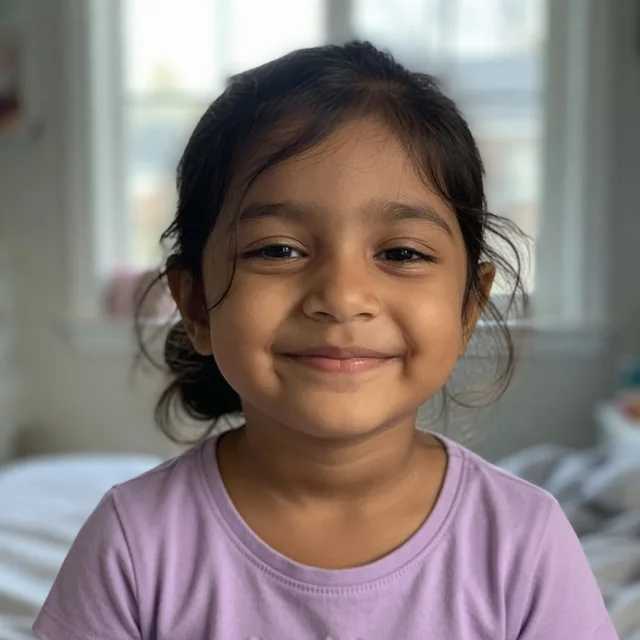
The photo they uploaded

The character we drew
The whole book read aloud, the way it arrives with a hardcover.
Written from this story — not a stock track with a name dropped in. Free with every book.
The full story, in text
- 1Night folds over Noor's room. She opens the window and begins her star tucking.
- 2The youngest stars blinked first. Noor tucked them beneath soft clouds and said, "Goodnight, stars."
- 3The middle stars settled next. Noor smoothed their cloud blankets and sang, "Sleep tight, bright stars." The sky can rest.
- 4Then Favourite Star twinkled into place. Noor cupped her hands and called, "Rest now, Favourite Star."
- 5Only Moon remained awake. Noor asked, "What do you do after I fall asleep?"
- 6Moon smiled and lit the quiet paths between the clouds. "I keep watch," said Moon.
- 7Favourite Star bobbed beside Moon. "We keep the sky company together," it said. The sky can rest.
- 8Noor's breath slowed. She said, "Goodnight, Moon. Keep the quiet kindly."
- 9Favourite Star gave one last twinkle. Noor answered, "Goodnight, Favourite Star. Glow gently."
- 10Noor closed the window and brushed her teeth. Moon's glow slipped softly across the floor.
- 11Noor climbed beneath her quilt. "Goodnight, Moon," she said. Moon kept the window glow company.
- 12Noor slept safely. Moon, Favourite Star, and every tucked star kept the sky company. The sky can rest.
The words to the song
[Verse 1]
Noor opens wide the window
Young stars blink in the night
She tucks them under soft clouds
“Goodnight, stars,” says Noor

[Chorus]
Sleep tight, bright stars, sleep tight
Moon keeps watch with gentle light
The sky can rest, the sky can rest
Noor, close your eyes and rest

[Verse 2]
Middle stars find cloud beds
Favourite Star twinkles bright
“Rest now, Favourite Star”
Moon lights paths through clouds

[Chorus]
Moon and Favourite Star keep watch
They keep the sky company
Goodnight, Moon, glow so kind
Noor sleeps safe beneath her quilt
The painted cover is free, so you see your child on the front of their own book before you decide anything. After that it is a softcover or a hardcover — the current prices are on one page, and the hardcover comes with the story narrated and a song written from it.
Start with the photo, or read a whole book first.
Book covers are shown unaltered for identification, sourced from Open Library. Each cover remains the property of its publisher and illustrator. KindFable is not affiliated with any of the books recommended here.