The best books for 3-year-olds are the ones a three-year-old can take over.
Somewhere between the third and fourth birthday the book stops being something you do to a child and becomes something they perform. They hold it. They turn two pages back because you went too fast. They say your line before you do, and they tell you — with some heat — when you have got it wrong.
So this list is not sorted by theme. It is sorted by what your child says while you are reading, because at three they have finally started saying it, and the four things they say point at four different shelves.
Which book should I read to a 3-year-old?#
Find the sentence you hear most often in your house, and read across.
| What they say | What is going on | Read next | Ages |
|---|---|---|---|
| "Again." — the same book, immediately, for the fortieth time | Repetition is doing real work at three; it is not stalling | The Gruffalo · We're Going on a Bear Hunt | 2–6 |
| "I do it." — they take the book off you and narrate it themselves | They want to be the teller rather than the audience | Good Night, Gorilla · Rosie's Walk | 0–5 |
| "No!" — a refusal, a strong view, a floor-level meltdown | Three is the year of having an opinion and defending it | No, David! · Llama Llama Red Pajama · Don't Let the Pigeon Drive the Bus! | 2–7 |
| "Where did she go?" — the worry that arrives at bedtime | Separation is the largest fear most three-year-olds carry | Owl Babies · The Tiger Who Came to Tea | 2–6 |
If your house produces all four in a single evening, you have a three-year-old. Start with the "again" row, because it is the one they hand straight back to you.
What is a three-year-old actually doing with a book?#
Four things are true at three that were not true at two, and each one changes what is worth buying.
They have become the teller. Asking questions and letting the child do the talking has a name — dialogic reading — and as Reading Rockets puts it, "the adult helps the child become the teller of the story." Reading Rockets is an education service of WETA, the public television station in Washington, D.C.
Repetition is teaching them words. In a study of three-year-olds published in Frontiers in Psychology, Jessica Horst and colleagues found that children who heard the same storybooks repeatedly across a week retained the new words when tested a week later, while children who heard nine different books did not. As the University of Sussex summarised it, "it's not the number of books, but the repetition of each book that leads to greater learning."
Everything is alive. The American Academy of Pediatrics describes a preschooler who "will often assign living qualities and emotions to inanimate objects, such as a tree, a clock, a truck, or the moon", offering the example that if you ask why the moon comes out at night, she might reply, "To say hello to me". A three-year-old does not need talking animals explained to them.
They have opinions and will defend them. This is the year a child works out that they are a separate person who can want something different from you. It is exhausting, and it is also why a whole category of books suddenly lands.
If they say "again": books that survive the fortieth reading#
These are the ones a three-year-old recites before they can read a word. Buy for the sound of the sentences — you will be saying them a great many times.
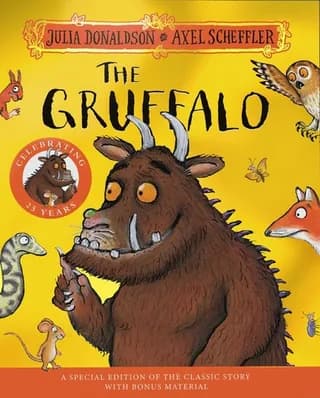
1. The Gruffalo#
- Written by
- Julia Donaldson
- Illustrated by
- Axel Scheffler
- First published
- 1999
- Ages
- 3–7
- Format
- Board book and picture book
A mouse invents a monster to frighten off everything that wants to eat him, then meets the monster. Julia Donaldson's rhyme is exact enough that a three-year-old can hold the whole book in their head, and this is the classic age for reciting it from a car seat.
Reading it aloud: pick a voice for the mouse and keep it. Three-year-olds notice a swap and will stop you to say so, which is itself a sign the book has landed.
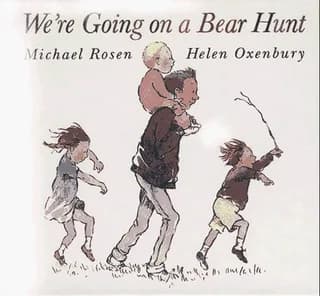
2. We're Going on a Bear Hunt#
- Written by
- Michael Rosen
- Illustrated by
- Helen Oxenbury
- First published
- 1989
- Ages
- 2–6
- Format
- Picture book
Michael Rosen and Helen Oxenbury turned a campfire chant into a book, and it is a performance rather than a read. Swishy swashy. Splash splosh. Squelch squerch. The second half runs the whole journey backwards at speed.
Reading it aloud: stand up and hand them the swishy swashy. This is the one book here that gets worse sitting down, and at three they can finally do the actions in time with you.
If they say "I do it": books a three-year-old can tell back to you#
The most under-served category on every age list. A book with few words or none is not a lesser book at three — it is the one that turns your child from the audience into the narrator.
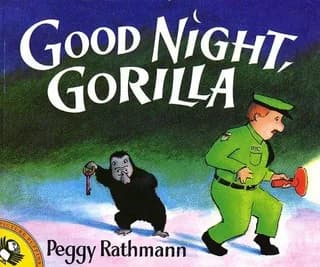
3. Good Night, Gorilla#
- Written by
- Peggy Rathmann
- First published
- 1994
- Ages
- 0–4
- Format
- Board book and picture book
Almost wordless. The gorilla lifts the zookeeper's keys and lets every animal out, and they all follow him home to bed. Because there is barely any text, the story only exists if somebody tells it — and at three that somebody can be your child.
Reading it aloud: say nothing and point. Then let them do the pointing. This is also the best book here for a grandparent who is nervous about reading aloud.
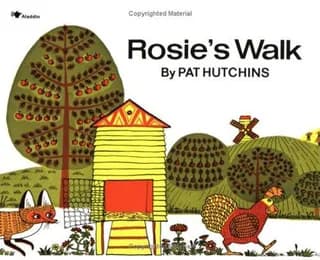
4. Rosie's Walk#
- Written by
- Pat Hutchins
- First published
- 1968
- Ages
- 2–5
- Format
- Board book and picture book
Thirty-two words in total. Rosie the hen goes for a walk around the farmyard, and the text never once mentions the fox stalking her, who is flattened, drenched and stung on every page. The child sees everything the words leave out.
Reading it aloud: read the flat little sentences absolutely straight and let the pictures do the work. Knowing something the book has not said is a three-year-old's favourite feeling in the world, and this is the cleanest example of it in print.
If they say "no": books about having a strong opinion#
Three is the year of the refusal, and books that meet it head-on beat any number of books about sharing nicely. A child who is told "no" all day is delighted to find a book where somebody else is on the receiving end.
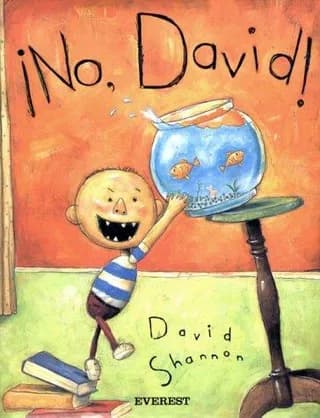
5. No, David!#
- Written by
- David Shannon
- First published
- 1998
- Ages
- 2–5
- Format
- Picture book
David draws on the wall, runs down the street with no clothes on, and is told "no" on virtually every page — until the last one. David Shannon redrew it from a book he made himself at five, and it was named a Caldecott Honor Book in 1999 by the American Library Association.
An honest note: plenty of adults dislike this one, because a whole book of a small boy being shouted at reads badly to a grown-up. Three-year-olds read it as recognition, and as permission to laugh at the thing they get told off for. The ending, which is a hug, is why it works.
Reading it aloud: put real exasperation into the "no"s and let them join in. They will.
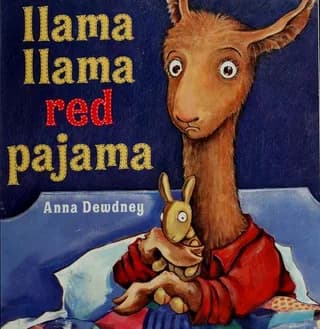
6. Llama Llama Red Pajama#
- Written by
- Anna Dewdney
- First published
- 2005
- Ages
- 2–6
- Format
- Board book and picture book
The tantrum told from inside the tantrum. Baby Llama waits, frets, and then completely loses it while his mother is downstairs on the phone. Anna Dewdney's rhyme speeds up as the panic builds and slows right down when his mother arrives.
Reading it aloud: children who are themselves stalling at bedtime find this funny rather than instructive, which is the right response and works far better than a lecture about staying in bed.
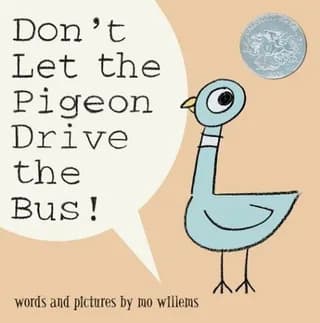
7. Don't Let the Pigeon Drive the Bus!#
- Written by
- Mo Willems
- First published
- 2003
- Ages
- 3–7
- Format
- Picture book
A pigeon wheedles, bargains and finally screams at the reader for permission to drive a bus. The child's only job is to say no, which makes this the one book here where a three-year-old holds all the power — and they know it.
Reading it aloud: it needs an audience that answers back, so it is a superb book for winding a child up and a poor one for winding them down. Read it at breakfast.
If they worry at bedtime: books that end with everyone home#
Separation is the big three-year-old fear, and it arrives at bedtime in the same year as nursery, preschool or a new bedroom. Both of these are quiet, and both end with everyone home.
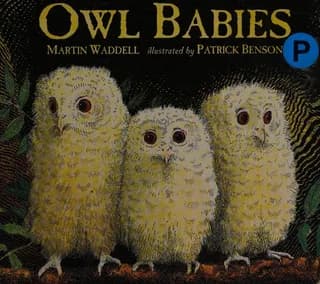
8. Owl Babies#
- Written by
- Martin Waddell
- Illustrated by
- Patrick Benson
- First published
- 1992
- Ages
- 2–5
- Format
- Board book and picture book
Three owlets wake in the night to find their mother gone. Sarah and Percy reason about it; Bill just says "I want my mummy" over and over, which is the truest line in any picture book about being small. Then she comes back.
Reading it aloud: the Scottish Book Trust suggests drawing attention to the owls' feelings and asking a child to name what they can see, noting that "this soothing story provides lots of opportunities to discuss children's fears". Give Bill's line to your child and they will take it.
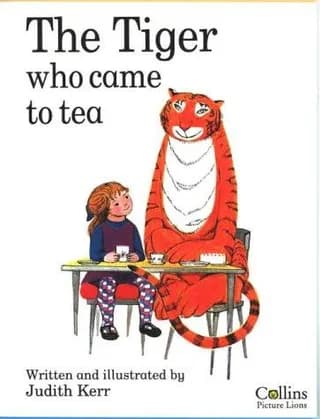
9. The Tiger Who Came to Tea#
- Written by
- Judith Kerr
- First published
- 1968
- Ages
- 2–6
- Format
- Picture book
A tiger arrives at teatime, eats absolutely everything in the house including all the water in the tap, and leaves. Nobody is frightened, nobody explains, and the family goes out for sausages in the dark.
Reading it aloud: the joy is entirely in the escalation, so sound more delighted with each thing the tiger eats. Resist making it mean something — a three-year-old is perfectly happy for a tiger to turn up and never come back.
Are board books good for 3-year-olds?#
They are fine, and largely no longer the point. This is the question the age lists skip, and it changes what goes in the basket.
Board pages solve a problem your child has stopped having. Thick card exists to survive being chewed and grabbed by a fist. A three-year-old turns pages with fingers, one at a time, mostly in the right direction.
Buy the paper picture book for home. Not for durability — for range. Most of the books that land hardest at three were only ever made as picture books, so restricting yourself to board editions quietly deletes half the good shelf.
Keep exactly one board book in the bag. The nursery run, the car, the long wait in a café. That is the board book's job now, and it is a real one.
If the rhythm is why you want the book, check the page count. A board edition is a reprint at a smaller size, so compare it against the original before you buy the version you will read four hundred times.
The one book we would hold back a year#
- Written by
- Maurice Sendak
- First published
- 1963
- Ages
- 4–8
- Format
- Picture book
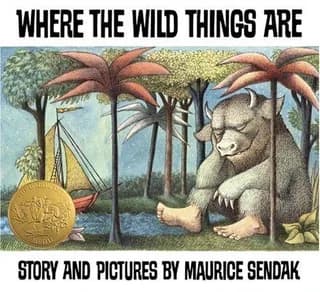
Where the Wild Things Are appears on essentially every three-year-old list, and is banded 3–6 nearly everywhere, including on our own list of the best children's books of all time. Here is the case for waiting.
Max is sent to bed without supper and sails away to be king of the monsters. It is the best book ever written about a tantrum — but it is written from above the tantrum, by somebody who already knows it will end. A four-year-old can stand outside their own anger far enough to enjoy that. A three-year-old, in the year when the anger is new and enormous, often cannot, and the wild rumpus reads as frightening rather than thrilling.
Nothing is lost by waiting. Read it at four, when it becomes one of the great ones.
How do I read to a three-year-old so they join in?#
Everything here improves with performance, and three is the first age where the child performs back. Three things that work across all nine:
Leave the last word of the line to them. In The Gruffalo, stop before the rhyme lands. In Owl Babies, stop before "I want my mummy". They will fill it, and filling it is reading in the only sense that matters at three.
Keep the prompts simple at three. Reading Rockets notes that recall and distancing prompts — asking a child to retell a story, or to tie it to their own life — "should be limited to four- and five-year-olds". At three, the fill-in-the-blank prompt is the one that works.
Let them choose the same book again. This is the hardest one for adults and the one with research behind it. Their fortieth reading is not your fortieth reading.
What to read next#
- The whole shelf, sorted by the age each book lands at → the best children's books of all time.
- Your three-year-old has worn out one particular book → books like The Very Hungry Caterpillar picks the next one from which part of it they respond to.
- Why some books survive forty readings and others do not → what makes a good children's story.
- The rest of the preschool shelf → books that teach colors, and starting school books for the year after this one.
- The other thing happening at three → potty training books, and why the book is a script rather than a method.
What does a three-year-old make of a personalized children's book with photo of themselves?#
If you remember one thing from this page, make it who each book is for:
- The one who says "again" → The Gruffalo, then Bear Hunt once they can do the actions.
- The one who takes the book off you → Good Night, Gorilla, then Rosie's Walk.
- The one who says no to everything → No, David! at three; the Pigeon whenever there is an audience.
- The one who worries at bedtime → Owl Babies, and keep it in the room.
Nine good books, and not one of them is about your child.
That is not a complaint — it is what a classic is. A book earns fifty years by being about everyone, which means it is never quite about anyone. But three is precisely the year a child starts insisting on themselves: I do it. Me. That's MY one. The work of the whole year is discovering that they are a separate person with their own opinions — and then we hand them a book about a hen, a llama and a boy called David.
There is one more book available to you, and it is the one no publisher can print in advance: the one where the person doing the insisting is yours.
That is what we make at KindFable. You upload one photo, type a few lines about your child — what they are into, something that actually happened this month — and we paint them as the hero of a full 32-page storybook. Not their name dropped into a template: their face, drawn as a character, on every page, with up to three companions beside them. A grandparent, the dog, an imaginary friend who lives on the ceiling.
A three-year-old is close to the ideal reader for it. A personalized children's book with photo asks them to believe one thing — that they are in the story — and at three that is the easiest belief in the world.
Here is a complete one. Noor is four, and her parents wrote three sentences: she has appointed herself the moon's helper, she tucks the stars in from her window youngest first, and she wants to know what the moon does after she falls asleep. Read the whole book, and press play on the narration.
The actual book
Read it, and hear it
Everything below is the finished book — not a mock-up, not a selection of the good pages. The narration and the song are the ones the family received.
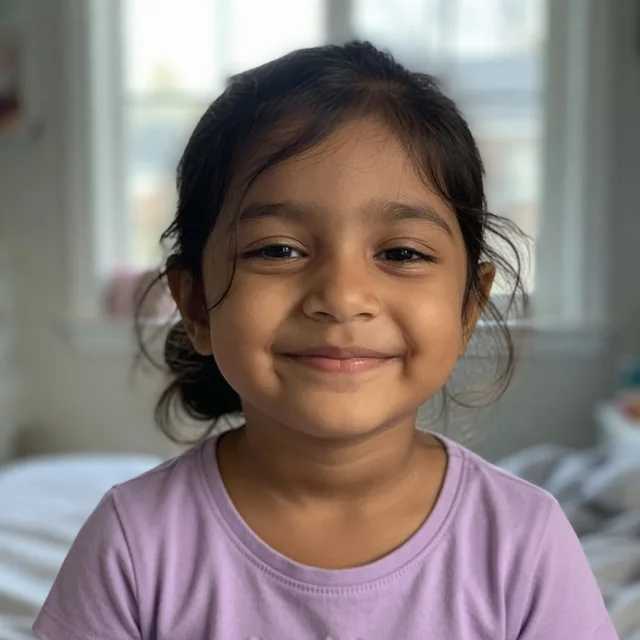
The photo they uploaded
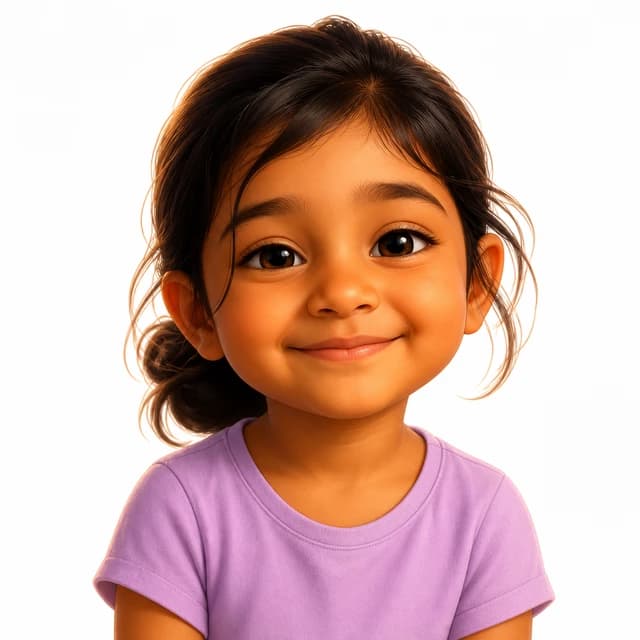
The character we drew
The whole book read aloud, the way it arrives with a hardcover.
Written from this story — not a stock track with a name dropped in. Free with every book.
The full story, in text
- 1Night folds over Noor's room. She opens the window and begins her star tucking.
- 2The youngest stars blinked first. Noor tucked them beneath soft clouds and said, "Goodnight, stars."
- 3The middle stars settled next. Noor smoothed their cloud blankets and sang, "Sleep tight, bright stars." The sky can rest.
- 4Then Favourite Star twinkled into place. Noor cupped her hands and called, "Rest now, Favourite Star."
- 5Only Moon remained awake. Noor asked, "What do you do after I fall asleep?"
- 6Moon smiled and lit the quiet paths between the clouds. "I keep watch," said Moon.
- 7Favourite Star bobbed beside Moon. "We keep the sky company together," it said. The sky can rest.
- 8Noor's breath slowed. She said, "Goodnight, Moon. Keep the quiet kindly."
- 9Favourite Star gave one last twinkle. Noor answered, "Goodnight, Favourite Star. Glow gently."
- 10Noor closed the window and brushed her teeth. Moon's glow slipped softly across the floor.
- 11Noor climbed beneath her quilt. "Goodnight, Moon," she said. Moon kept the window glow company.
- 12Noor slept safely. Moon, Favourite Star, and every tucked star kept the sky company. The sky can rest.
The words to the song
[Verse 1]
Noor opens wide the window
Young stars blink in the night
She tucks them under soft clouds
“Goodnight, stars,” says Noor

[Chorus]
Sleep tight, bright stars, sleep tight
Moon keeps watch with gentle light
The sky can rest, the sky can rest
Noor, close your eyes and rest

[Verse 2]
Middle stars find cloud beds
Favourite Star twinkles bright
“Rest now, Favourite Star”
Moon lights paths through clouds

[Chorus]
Moon and Favourite Star keep watch
They keep the sky company
Goodnight, Moon, glow so kind
Noor sleeps safe beneath her quilt
On KindFable it goes: name and age, one photo, a tick box for consent, a few lines about your child, and one of nine art styles. You see the cover, painted, before you pay for anything — the softcover and hardcover prices sit on one page, and the hardcover adds the narrated audiobook (and every book includes its own song, free), which is how Noor's book got its narration and its song.
Read the nine first. Then, when they ask for it again — and at three they will — start with the photo.
Book covers are shown unaltered for identification, sourced from Open Library. Each cover remains the property of its publisher and illustrator. KindFable is not affiliated with any of the books recommended here.